
Joint Green Groups Recommendation for the updated Climate Action Plan
The first part of the 6th assessment report released by IPCC in August 2021 indicates that climate change is now an—if not the most—existential threat to humanity. The impacts are no longer expected to just affect the next generation. The impacts are being manifested now. The IPCC, despite its inherently conservative nature states, “Global warming of 1.5°C and 2°C will be exceeded during the 21st century unless deep reductions in carbon dioxide (CO2) and other greenhouse gas emissions occur in the coming decades… With further global warming, every region is projected to increasingly experience concurrent and multiple changes in climatic impact-drivers. Changes in several climatic impact-drivers would be more widespread at 2°C compared to 1.5°C global warming”. We are already seeing the enormous human and economic costs with the storms, droughts, and heat creating floods and fires in all continents.
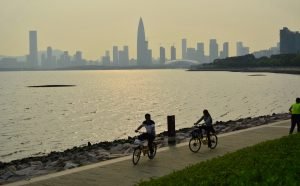
Hong Kong is not exempted. The Pearl River Delta is considered to be an area that will be severely affected by typhoons and consequent storm-surges. Hong Kong will suffer more frequent heat extremes and heavy precipitation. Flooding will increase with frequent storm surges and heavy rainfall with potentially devastating socio-economic consequences. In fact, this year, the Hong Kong Observatory recorded the city’s hottest May, with 12 ‘very hot’ days and 14 ‘hot’ nights. Sub-divided residents in low-income areas of the city suffer the most. Energy poverty (relative spending on energy) is also prominent among low-income groups.
In October 2020, the HKSAR Chief Executive stated that Hong Kong should be carbon neutral by 2050 and pledged to update the Climate Action Plan by the middle of this year. We hope the Climate Action Plan yet to be published will set out a comprehensive roadmap to achieve carbon neutrality before 2050.
We appreciate the Government’s commitment to decarbonising Hong Kong’s economy while at the same time tackling many other social challenges such as provision of adequate housing. But in doing so, we should also ensure we build climate resilience in our city, infrastructure, and economy to ensure people’s well-being and safety.
We note that progress in reducing the average energy consumption of commercial buildings is slow and this will hinder reaching targets. The number of private cars in Hong Kong increased by a staggering 40% between 2010 and 2019. These kinds of trajectories are not favorable for the city moving toward carbon neutrality.
We do, however, believe that Hong Kong, as a developed city with little exposure to hard-to-decarbonise sectors such as industry and agriculture should lead in achieving net-zero by 2050.
Yet, to achieve decarbonisation, Hong Kong needs specific and comprehensive policies coupled with regular progress reviews.
This document sets out our suggestions for a comprehensive, yet feasible, long-term Climate Action Plan to contribute towards the goal of carbon neutrality for Hong Kong before 2050 as a contribution to the Paris Agreement’s target of limiting global warming to 1.5°C above pre-industrial levels. Specifically, we recommend the following principles to the Chief Executive for her 2021/22 Policy Address as fundamental components of such a holistic climate policy:
Initiators (in alphabetical order of organisation names):
 Co-signatories (in alphabetical order of organisation names):

Media Enquiries
Please contact Ms. Fiona Lau, Programme Manager at Civic Exchange and “Hong Kong 2050 is Now” at [email protected] or 59637397.