SCMP: For decades, Hong Kong’s tourism success rested on a clear formula: shopping, dining and urban experiences. That model is losing momentum. Overnight visitor spending has fallen from around HK$193 billion (US$24.6 billion) in 2015 to HK$128 billion last year. Shopping has declined sharply as spending shifts to sightseeing and experiences. Travellers are no longer coming only to consume – they seek a connection to nature, culture and place.
This transition presents a clear opportunity. Hong Kong’s country parks, coastlines and rural landscapes are all within easy reach of the city centre. As tourism evolves, these natural assets are becoming increasingly central to Hong Kong’s competitiveness. Unsurprisingly, ecotourism has emerged as a popular solution, promising a model where economic development and conservation reinforce each other.
Yet much of what is currently labelled as ecotourism is not delivering ecological outcomes. Across Hong Kong, nature-based activities have grown rapidly but so have the pressures on fragile environments. Popular sites such as Sharp Island, the High Island Reservoir East Dam and MacLehose Trail are increasingly overcrowded, with trampling, habitat degradation and wildlife disturbance becoming more visible.
This creates a contradiction. If ecotourism is meant to protect nature, why are some of our most visited eco-destinations under increasing pressure?
The instinctive response is to assume Hong Kong lacks guidance. This is not the case. Globally, ecotourism is well defined. Organisations such as the United Nations, Global Sustainable Tourism Council and International Union for Conservation of Nature converge on a consistent set of principles: ecotourism must be nature-based, minimise environmental impact, provide education and deliver benefits to conservation and local communities.
The issue is implementation. In Hong Kong, the framework for ecotourism is fragmented. Policy references are often conceptual, guidelines are largely non-binding and responsibilities are distributed across multiple actors: government departments, site managers and community groups – without a clear mechanism to align incentives or enforce outcomes.
This creates a structural gap. Sites may be promoted for tourism, but those managing them often lack the authority to control visitor behaviour. Visitors are expected to regulate themselves, even in ecologically sensitive areas. When environmental degradation occurs, responsibility becomes diffused rather than addressed. The result is a system where nature is increasingly consumed, but not systematically protected.
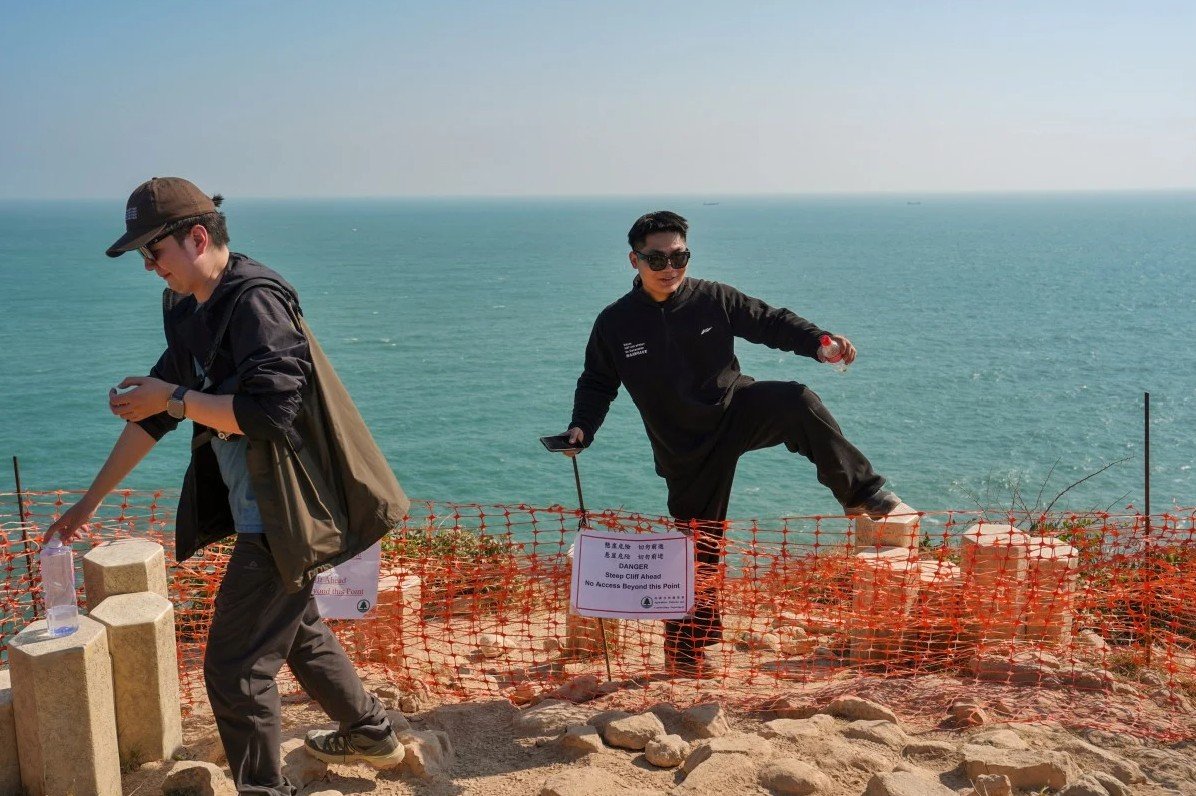
In recent weeks, footage circulating online show visitors in Sai Kung East Country Park climbing trees wrapped with hazard tape, disregarding clear warnings. With “golden week” upon us and visitor numbers set to surge, such behaviour is unlikely to be an isolated case. It reflects a broader reality: when visitor management relies on self-discipline alone, even basic safeguards are ignored.
This challenge is further compounded by how visitor flows are shaped. Decisions on tourism promotion and site visibility are not always fully aligned across departments, particularly when natural areas are positioned as destinations. Meanwhile, social media platforms increasingly influence visitor behaviour in ways difficult to anticipate or manage. A viral post can rapidly transform a relatively unknown area into a heavily visited site, often without the necessary infrastructure or controls in place.
If this continues, ecotourism risks becoming part of the problem it was meant to solve. What is needed is not another label, but a shift in how ecotourism is governed and delivered.
First, ecological limits must become the starting point. Not every site should be promoted; not every trail opened. Ecologically sensitive areas and locations with limited carrying capacity must be clearly identified and, where necessary, excluded from tourism development. Without this discipline, expanding access simply spreads pressure.
Second, visitor flows must be managed in an increasingly unpredictable environment. Proposals such as alternative trail networks point in the right direction by seeking to relieve pressure on hotspots. But redistribution is not simply about opening new routes. It requires alignment with ecological sensitivity, trail difficulty and safety conditions. Routes that are narrow, high-risk or environmentally fragile should not be repackaged as accessible tourism products.
Third, local communities must move from being passive recipients to active partners. Villages are not just destinations, but potential stewards of the landscape. Their knowledge and concerns should shape how tourism is designed and managed. At the same time, ecotourism must generate sustainable livelihood opportunities. Experiences such as guided walks and cultural programmes are often highlighted, but their long-term viability depends on whether they can operate beyond initial public funding. Engaging the private sector can help support local enterprises.
Finally, governance must be aligned. Planning, infrastructure, conservation and tourism are managed by different parts of the government, creating coordination gaps. A clearer institutional framework is needed to connect these functions, from site planning and visitor management to licensing and enforcement. This includes addressing barriers such as inconsistent rules for rural businesses.
Ultimately, ecotourism is not just about where people go, but how and why they go. Without stronger systems in place, even the most basic protections, from trail boundaries to hazard warnings, risk being overlooked.
For Hong Kong, the stakes are high. As global tourism shifts towards experience-based models, cities that can offer well-managed nature experiences will have a competitive advantage. Conversely, if natural assets are degraded through unmanaged use, that advantage erodes.
As Hong Kong’s tourism model evolves, ecotourism will play an increasingly prominent role. The challenge is not whether it will grow, but whether its growth safeguards the very nature it depends on. Once we recognise this tension, it becomes difficult to ignore: if ecotourism is meant to protect nature, how do we ensure it actually does?
Originally published on SCMP on 3 May 2026. Written by Kitty Tam and Charlie Yip.