Asia Business Outlook: Hong Kong is being urged to utilize waste-to-energy (WTE) incinerators in the Greater Bay Area (GBA) instead of solely investing in local facilities, as it seeks to eliminate landfills by 2035 and generate over 900 million kilowatt-hours of electricity.
In 2023 alone, Hong Kong produced 3.97 million tonnes of waste, according to the Environmental Protection Department. Experts, including Dr. Iu and Dr. Shipeng Zhang from The Hong Kong Polytechnic University, argue that the region’s vast network of 700+ incinerators, including Zhuhai’s Environmental Biomass Thermal Power Project, already has the capacity to handle all of Hong Kong’s waste.
Key Highlights
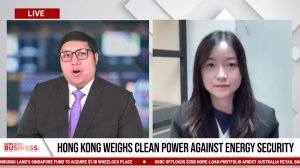
The Zhuhai facility alone processes up to 3,000 tonnes of municipal solid waste daily. “In China, there are a lot of incinerators that don’t have enough waste to burn,” Lawrence Iu, executive director at public policy think tank Civic Exchange, told Asian Power via Zoom. “We can explore collaboration with Mainland China to utilise idle facilities in the Greater Bay Area, which can ease the pressure for Hong Kong to build new facilities.”
Locally, Hong Kong is developing its first large-scale WTE facility, I•PARK1, situated on an artificial island off Shek Kwu Chau. With a $4 billion investment, the project—under development since 2015—is nearing completion and will process 3,000 tonnes of waste per day, generating enough electricity to power 100,000 households.
Originally published on Asia Business Outlook on 8 July 2025.