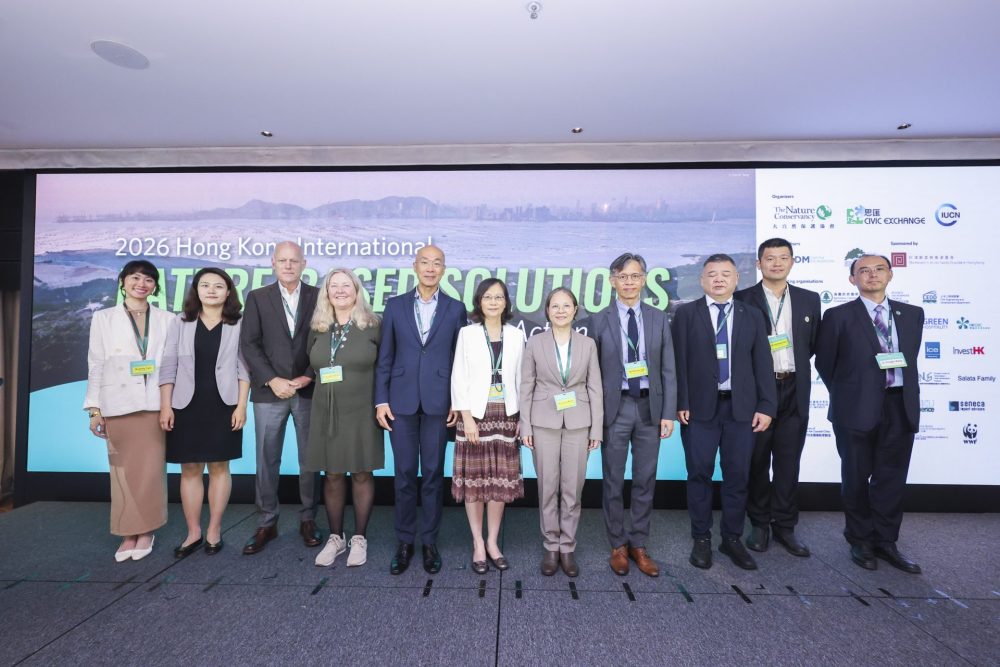
Bastille Post: The 2026 Hong Kong International Nature-based Solutions (NbS) Action Week took place in Hong Kong June 1–5, 2026, featuring a five-day program comprising two days of site visits, a two-day conference and a one-day workshop. The event convened over 400 participants and over 40 international and local speakers, bringing together leaders from government, finance, business, academia and civil society from Hong Kong, the Greater Bay Area (GBA), the wider Asia-Pacific region, and beyond.
Jointly organized by The Nature Conservancy (TNC) Hong Kong, Civic Exchange (CE) and the International Union for Conservation of Nature (IUCN), and supported by The Robert H. N. Ho Family Foundation Hong Kong, NbS Action Week aimed to accelerate the implementation and financing of high-integrity Nature-based Solutions across Hong Kong, the GBA and the Asia-Pacific region—as cities and economies worldwide face intensifying climate and biodiversity challenges.
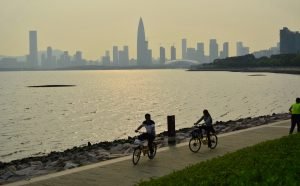
The week opened with two days of site visits in Hong Kong and Shenzhen, where participants explored NbS in practice—from wetland restoration at Long Valley Nature Park and science-based stewardship at Kadoorie Farm and Botanic Garden (KFBG), to coastal restoration at Shenzhen Bay and integrated urban solutions at Lianhuashan Park—highlighting the importance of long-term stewardship and science-based adaptive management.
Building on insights from the site visits, the two-day conference brought participants together to examine how standards, governance and finance can accelerate high-integrity NbS at scale. At the opening of the conference, Mr. Anthony Gao, Executive Director for Hong Kong and Regional Partnerships of The Nature Conservancy, underscored the need for cross-sector collaboration to translate ambition into implementation.
“Nature-based Solutions work with nature rather than against it, and they’re increasingly vital for climate resilience, biodiversity, and sustainable urban development,” said Gao. “Through NbS Action Week, we convene decision-makers and practitioners across sectors—from policy and finance to research, business, and communities—to translate shared priorities into high-integrity, investable projects. Nature is already delivering solutions—our job is to recognize their value, invest in their future and work together to implement them.”
Senior officials from the Ministry of Natural Resources (MNR) of the People’s Republic of China and the Hong Kong Special Administrative Region Government (HKSARG) attended and spoke at the conference, including Ms. Chen Danhong, Director-General of the Department of International Cooperation, MNR; Mr. Gu Zhixin, Deputy Director General of the Land Consolidation and Rehabilitation Center, MNR; Ms. Diane Wong, Under Secretary for Environment and Ecology, HKSARG; Mr. Joseph H. L. Chan, JP, Under Secretary for Financial Services and the Treasury, HKSARG; Ir Michael Fong, Director of Civil Engineering and Development, HKSARG; Mr. Mickey Lai, Director of Agriculture, Fisheries and Conservation, HKSARG; and Ms. Sindy Wong, Head of Consumer and Hospitality, Invest Hong Kong, HKSARG, alongside international, regional, and local experts from the wider program.
With this breadth of participation, Hong Kong’s unique landscape—where a dense urban center coexists with extensive country parks, wetlands, coastlines and marine ecosystems—provided a living laboratory to explore how NbS can be delivered across the territory and the wider GBA.
Implementing High-Integrity NbS Through a Whole-Of-Society Approach
The first day of the conference focused on translating NbS from concept into practice through stronger planning, governance, and cross-sector collaboration.
Discussions highlighted NbS as a science-based response to the interconnected crises of climate change, biodiversity loss, and ecosystem degradation, and emphasized the importance of applying the IUCN Global Standard for NbS to help ensure projects deliver measurable benefits for nature, people and climate. Speakers also explored multi-scale planning, cross-boundary cooperation across the GBA and beyond, and the integration of NbS into urban and peri-urban development.
Participants also reflected on the governance, partnerships and enabling conditions needed to deliver high-integrity and inclusive NbS, and shared a common view that meaningful impact will require a whole-of-society approach across governments, communities, financial institutions, academia, non-governmental organizations, and the private sector.
“Nature-based solutions have evolved from a conceptual framework into an indispensable, science-based tool for building climate resilience, conserving biodiversity and advancing sustainable development,” said Ms. Susanne Pedersen, Director of the IUCN, Center for Science and Knowledge. “As implementation accelerates, ensuring high integrity through global standards will be critical to delivering measurable benefits for nature, people and climate.”
Mobilizing Finance and Building Nature-based Economies
The second day shifted the conversation from implementation to investment, examining how nature-positive economies can unlock the capital needed to scale high-integrity NbS.
Speakers from government, finance, development institutions, and the private sector discussed the need to recognize, value and invest in nature to advance the Kunming–Montreal Global Biodiversity Framework and build climate-resilient communities. Discussions explored innovative financing mechanisms—including blended finance—emerging biodiversity and nature markets, and public–private partnerships to develop investable NbS pipelines.
Participants highlighted the importance of credible standards, robust measurement frameworks, and supportive policy environments to build funder confidence, alongside new economic models that position nature as a critical asset for long-term prosperity and resilience in Hong Kong, the Greater Bay Area and beyond.
A Resilient GBA: Turning Ideas Into Scalable, Investment-Ready NbS
Building on the conference, the week concluded with a full-day accelerator workshop delivered in collaboration with the Columbia Climate School and the Hong Kong Institute of Landscape Architects (HKILA), supported by an advisory group of experts. The workshop brought together cross-sector participants to test and prioritize NbS strategies—particularly for the Shenzhen River Basin and Shenzhen Bay—and to advance pathways for scaling delivery, including finance, governance, and stakeholder engagement.
Across the week, speakers emphasized the urgency of scaling high-integrity NbS—moving from pilots to investable programs and from dialogue to action.
“The next step is to move from pilots to scale—by strengthening credible, localized standards, building bankable project pipelines, and mobilizing blended finance that brings public, private, and philanthropic capital together. Hong Kong is well positioned to connect global standards, Greater Bay Area implementation opportunities and sustainable finance—so we can move from dialogue to action, and from recognizing nature’s value to investing in its future,” said Mr. Lawrence Iu, Executive Director of Civic Exchange, in his closing remarks.
Originally published on Bastille Post on 23 June 2026.